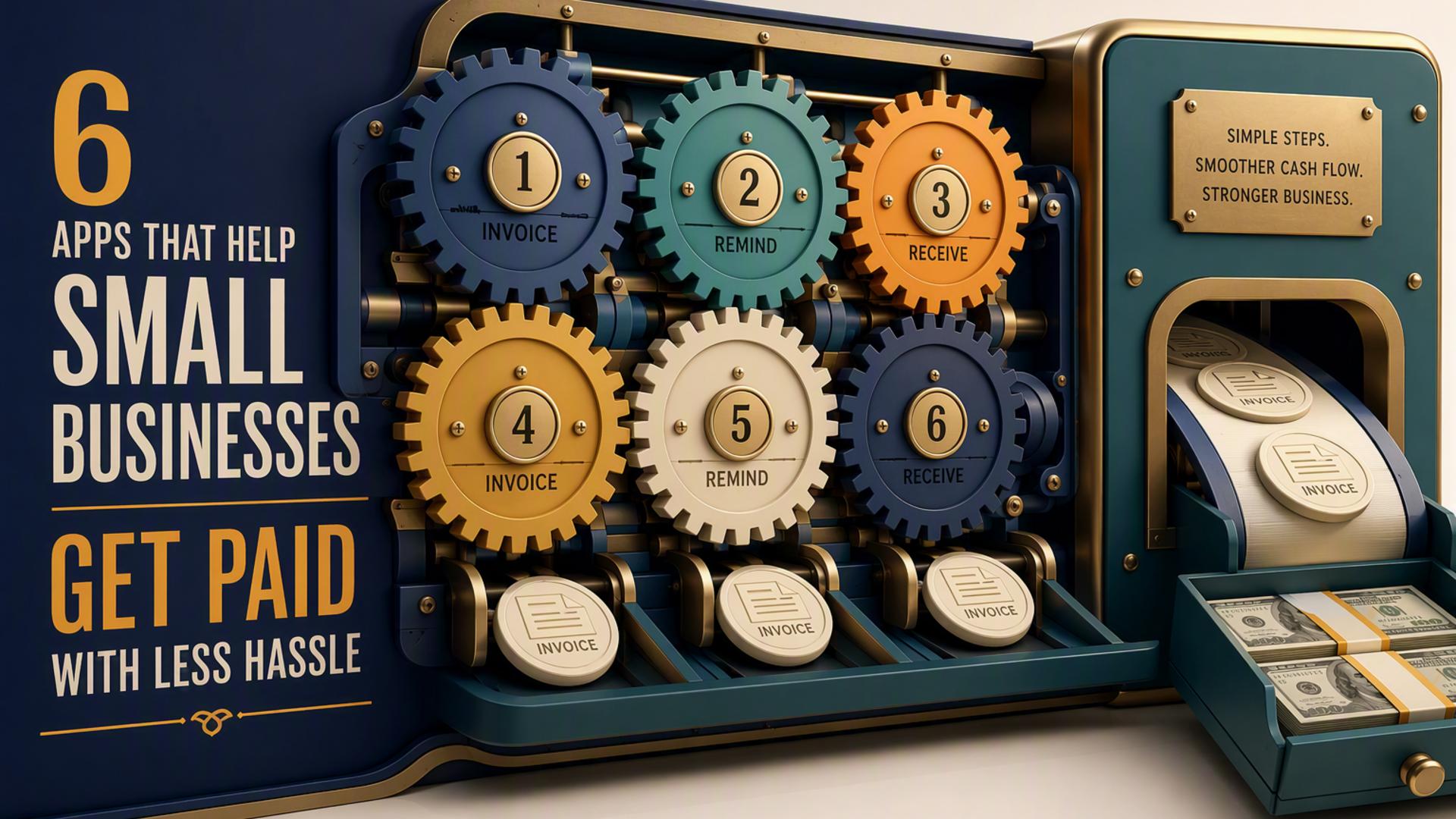
Six Tools That Simplify Small-Business Payments
Small business owners know the feeling: the work has been delivered, yet the payment can take weeks to arrive. An invoice is sent, followed by silence. Then comes one courteous reminder, then another, and eventually a message with a little more urgency. Usually, the client is not deliberately refusing to pay. More often, they are occupied, and settling the invoice does not become a priority until repeated reminders make payment less burdensome than ignoring the emails.
The issue is not necessarily the client; it is the amount of friction involved. Clients are more likely to pay when the process is straightforward, immediate, and routine. If payment takes effort, it is often postponed. Apps that reduce payment friction are not designed to make collections more forceful. Instead, they make paying so easy that delaying it becomes the less convenient choice. These are the practical ways that can work.
1. Sage: Software for Accounting and Invoicing
Sage addresses friction at the invoicing stage. A professional, branded invoice can be prepared and issued within minutes, allowing it to be sent as soon as work is finished instead of waiting until month-end. It contains the payment details a client needs to act immediately. From the moment an invoice is sent, it is automatically monitored, while reminders can be issued before and after its due date without the owner needing to follow up manually.
Once the payment is received, Sage automatically connects it to the relevant invoice and records it in the accounts. From creating the invoice through to reconciling the payment, the workflow requires little manual input, leaving more time for the work that leads to future invoices.
Why it matters: A self-managing invoicing workflow gets invoices out sooner, delivers reliable follow-ups, and automatically reconciles payments, reducing the period between finishing work and being paid.
2. HubSpot CRM: App for Customer Relationship Management
Knowing which clients settle invoices quickly, which clients usually need chasing, and how payment patterns vary across the customer base can help a small business make more informed decisions about relationships and cash flow. HubSpot CRM keeps client interactions, payment records, and relationship notes together, giving owners the information needed to determine suitable payment terms, deposit policies, and credit limits for individual clients.
The platform also offers a pipeline view of forthcoming work and anticipated revenue. This supports cash flow planning and helps identify weaknesses in the revenue pipeline before they turn into cash flow difficulties.
Why it matters: Visibility into client payment habits, alongside a forward-looking view of the pipeline, enables small business owners to manage cash flow before shortfalls arise rather than responding afterward.
3. MileIQ: App for Tracking Mileage
Small businesses that charge clients for travel and mileage in addition to service fees need accurate records for both invoicing and tax purposes. MileIQ operates in the background on a smartphone, detecting and recording trips automatically. Each journey can be marked as business or personal with a single swipe, then exported into a detailed mileage report for billing and tax claims.
For owners who forget miles driven for client work, leading either to underbilling or a missed deduction, MileIQ handles both concerns automatically without requiring active tracking.
Why it matters: Precise, documented mileage logs make sure billable travel is captured and charged appropriately while preventing the associated tax deduction from being overlooked.
4. DocuSign: App for Electronic Signatures
Invoice disputes are a particularly frustrating source of delayed payment. In many cases, they originate from uncertainty or a lack of a signed agreement covering the agreed deliverables and price. DocuSign enables contracts, proposals, statements of work, and change orders to be issued, signed, and returned digitally within minutes. This creates a clear, legally binding record of the agreed terms before work starts.
When an agreement is signed promptly and stored securely, the later invoice is clear. The client has no basis for disputing the terms, and payment can proceed without disagreements over scope or pricing creating friction.
Why it matters: Agreements that are clear, signed, and completed before work begins prevent the disputes that can hold up payment after the work has been delivered.
5. Stripe: App for Payment Processing
For many small businesses, the most consequential way to speed up payment is to provide an immediate, simple way to pay on every invoice. Stripe supplies the payment link that allows clients to pay with a credit or debit card directly from the invoice as soon as they open it. They do not need to arrange a bank transfer, write a check, or remember to return to the invoice later.
Stripe also integrates directly with accounting software, ensuring each payment is recorded and reconciled automatically without an additional bookkeeping task. Together, instant payment capability and automated record keeping remove the two principal points of friction in the payment workflow.
Why it matters: A client able to pay from an invoice email in thirty seconds is much more likely to pay at first contact than one who must begin a separate banking process.
6. Otter.ai: App for Meeting Transcription
An invoice may be open to dispute when a client meeting does not adequately document the project scope or agreed deliverables. Otter.ai records and transcribes client calls, meetings, and briefings as they happen, producing a searchable written account of everything discussed and agreed.
For a small business owner facing a client’s questions about an invoice because of differing recollections of a meeting, a complete timestamped transcript provides the most direct available protection. It also removes the requirement to take notes during meetings, making it possible to focus fully on the conversation.
Why it matters: Maintaining a clear record of every client agreement removes the uncertainty that leads to invoice disputes and the resulting payment delays.
Common Questions About Small-Business Payments
Why do small-business clients most often pay invoices late?
Surveys of small business owners repeatedly point to client busyness and the absence of a convenient payment method as the two leading reasons for late payment. Both are more common than intentional non-payment or financial difficulty. The most useful response is therefore to make payment as simple as possible and issue prompt, consistent reminders that return the invoice to the client’s attention at the appropriate time.
When should I send an invoice after work is completed?
It should be sent as quickly as possible after completion, preferably that same day. The longer the delay between finishing work and issuing an invoice, the longer it takes for the payment period to begin and the less recent the work becomes in the client’s mind. Same-day invoicing paired with a payment link for immediate settlement is the approach most likely to result in the quickest collection time.
Which payment terms are appropriate for a small business?
Net 30 remains the most widely used standard payment term in the US, although a small business is not required to use it. Net 14 or net 15 can be appropriate for most service businesses and is becoming more commonly expected by clients working with organized, professional suppliers. For large projects or new clients, requesting a deposit in advance and dividing the remaining amount into milestone payments lowers both cash flow risk and the value of any single disputed payment.
What should I do with a client who keeps paying late after reminders?
For clients who repeatedly pay late, the most effective response will usually combine shorter payment terms, an upfront deposit, and potentially a shift to automated Direct Debit collection in which the client pre-authorizes payment on the due date. When late payment continues despite these actions, it may be necessary to assess whether the relationship remains commercially viable after including the real cost of slow payment finance charges, time spent pursuing payment, and cash flow effects in the effective margin generated by that client’s business.
Are early-payment discounts worth offering?
Early-payment discounts may work well for clients who handle invoices themselves rather than using an automated accounts payable process. Offering one to two percent off for payment within seven to ten days is a common practice. It can be a worthwhile expense compared with the cash flow benefit of collecting sooner, especially where it effectively lowers or removes a financing cost. Whether to offer one depends on the business’s margin and the number of invoices to which the discount would apply.